
Why Does Your Glucose Drop on a Run?
Why steady runs pull your glucose down - the insulin-independent muscle effect, the five factors that decide how far you fall, and how to plan carbs before the dip.
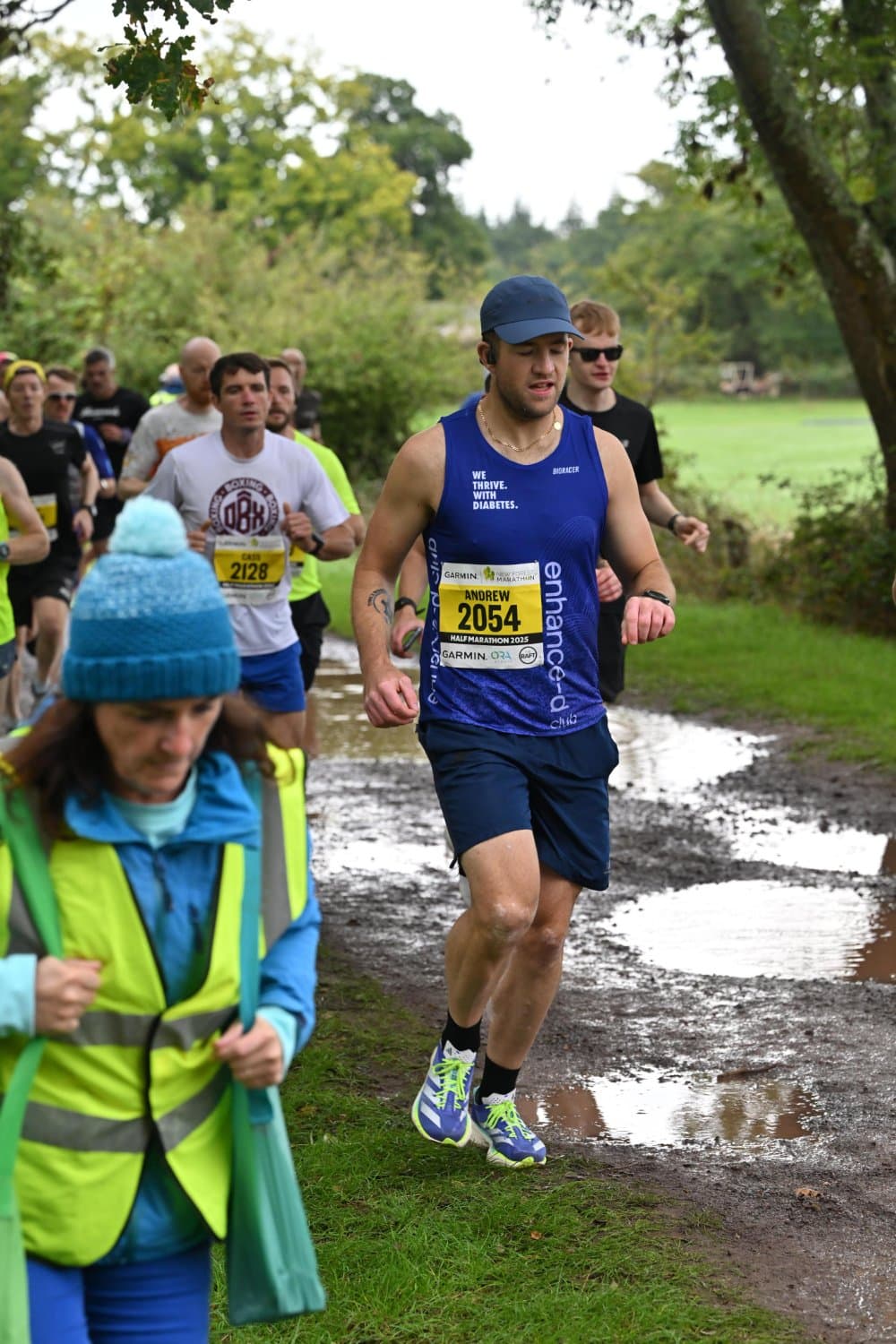
During steady aerobic exercise like running, your muscles pull glucose out of the bloodstream through a pathway that works independently of insulin - and any insulin you already have on board keeps working on top of that effect, so two systems lower your glucose at once. How far you fall depends on five factors: insulin on board, intensity, duration, what you ate, and your overall insulin sensitivity that day. Here is what is actually happening, and what changes it.
You set off feeling fine. Twenty minutes in, your CGM starts drifting down. By the half-hour mark you are chewing glucose tablets at a bus stop, wondering why a gentle run needs a fuelling strategy at all. If you live with type 1 diabetes, this is one of the most common and most fixable frustrations in exercise.
Why do muscles drink glucose without asking insulin first?
During aerobic exercise (steady running, cycling, swimming), your muscles pull glucose out of the bloodstream through a pathway that works independently of insulin. Contraction itself moves glucose transporters to the muscle cell surface. That is normally brilliant news - it is why exercise is such a powerful tool for glucose management.
The catch: any insulin you already have on board keeps working on top of that effect. Two systems are now lowering your glucose at once, and the result is the classic steady downhill trace.
What decides how far your glucose falls?
1. Insulin on board. A meal bolus in the last few hours is the single biggest multiplier of an exercise drop. The same run with and without active bolus insulin can behave completely differently. Many people find timing exercise before meals, or reducing the pre-meal dose ahead of a planned session, changes everything. Work out dose adjustments with your care team.
2. Intensity - and it flips the script. Steady, conversational efforts drive glucose down. Short, hard efforts (sprints, heavy intervals, a competitive finish) release adrenaline, which pushes glucose up. Mixed sessions can go either way, or spike first and drop later. Knowing which kind of session you are heading into is half the strategy.
3. Duration. The longer the steady effort, the more the muscle-uptake effect compounds. A 20-minute jog and a 90-minute long run are different sports as far as your glucose is concerned.
4. What you ate, and when. Starting a long session with low glycogen stores and no recent carbs means your blood glucose does more of the fuelling work. For shorter steady sessions, 10-20g of carbohydrate before or during is often all it takes; longer sessions usually need regular fuelling throughout. Our training guide on carbohydrate intake around exercise goes into the details. Taking carbs on board is a strategy, not a failure.
5. The rest of your day. Sleep, stress, illness, heat, and what training you did yesterday all shift insulin sensitivity. This is why the same run does not always behave the same way - and why watching your own patterns beats any generic rule.
The practical playbook
- Check your glucose and your insulin on board before you start, not just your glucose.
- For steady sessions, expect a downward drift and plan carbs before the dip, not after it.
- For hard interval sessions, expect the opposite - a temporary adrenaline rise usually settles on its own, and because the drop that follows hard training can be steep, many athletes agree an approach to mid-session corrections with their care team rather than correcting aggressively.
- Change one variable at a time, and give each change a fair test across a few sessions.
- Review the trace afterwards. The pattern is the teacher. Our guide to reading CGM data around exercise shows you what to look for.
See the whole picture in one place
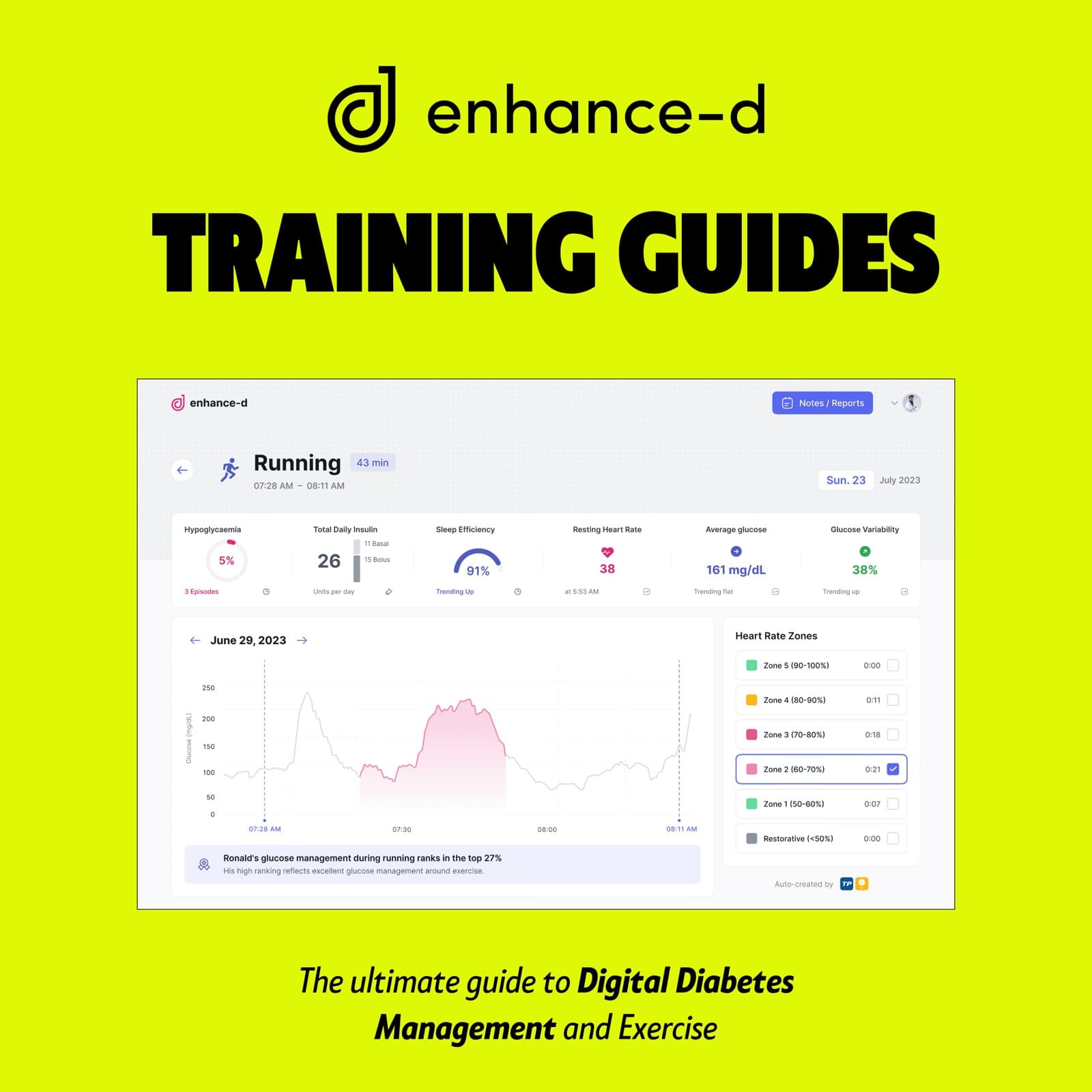
This is exactly the problem Enhance-d exists to solve. The app puts your CGM trace, your activity data and your route on one screen, so you can see what a session actually did - where you dipped, where you held, and what to try next time. The Glucose Map colours your route by your glucose, kilometre by kilometre.
And you do not have to figure it out alone: the Enhance-d Club community is full of people running the same experiments with the same hardware on their arms.
Download Enhance-d free and find your people in the app.
Keep reading
Put it into practice
See your own glucose patterns around training
Enhance-d brings CGM, workouts and community together - free to start on iOS and Android.